• The Art of ChoosingHome page
  • Fine Art Prints3 Editions
  • CollectionsAll Collections
  • AboutAmar Guillen
  • Customer Space & Contact
  • Select your language

    • English (United Kingdom)
    • Français (France)
  • All You Need to Select Your Fine Art Print
    • How to Choose a Fine Art Print - Q&A - FAQ
    • New Creations
    • Explore Some Interiors
    • Fine Art Print Blog
  • Browse by Edition
    • All Fine Art Prints
    • Unique Edition
    • Limited Edition
    • Open Edition
  • Browse by Style
    • Black and White
    • Color
    • Fusion
    • Impression
    • Back to Black
    • Landscapes in Black and White
    • Landscapes in Color
    • Animals in Black and White
    • Animals in Color
  • Browse by Theme
    • Landscape
    • Wildlife
    • Underwater
    • Abstract
    • Symbolic
    • Landscapes of the United States
    • Landscapes of France
    • Landscapes of Scotland
    • Seascapes
    • Relaxing
    • Energizing
    • Playful
  • Browse by Format
    • Rectangular
    • Square
    • Panoramic
  • Contact Me
    • Contact Me by Email or Phone
  • Collections
    • New Collections
    • All Collections
  • Browse by Theme
    • Landscapes
    • Wildlife
    • Underwater
    • Abstract
    • Symbolic
    • Landscapes of France
    • Landscapes of the United States
  • Browse by Style
    • Black and White
    • Color
    • Impression
    • Back to Black
    • Fusion
  • Contact Me
    • Contact Me by Email or Phone
  • Discover More About Me
    • Discover Who is Amar Guillen
    • Artistic and Photographic Statement
  • Galleries
    • Photo Galleries
    • Abstract Portfolio in Color
    • Black and White Landscape Photography Portfolio
    • Color Landscape Photography Portfolio
    • Black and White Wildlife Photography Portfolio
    • Color Wildlife Photography Portfolio
    • Underwater Photography Portfolio
  • Contact Me
    • Contact Me by Email or Phone
  • Your Customer Space
    • Create or Manage your Account
    • Your Download Space
    • Your Orders
  • Contact Me
    • Contact Me by Email or Phone

You are in that section: Home > Blog > Blog of the Photographic Creation Approach

5 Steps to Master the Photographic Writing

Photography is a form of art, which I discussed in this article. Art makes it possible to express emotions and to transmit messages. In this article, I also explained that photography is a very interesting medium because it is easy to implement. For me, photography is a form of writing that is not translated in words, but in other, more complex ways because they appeal to emotions and feelings.
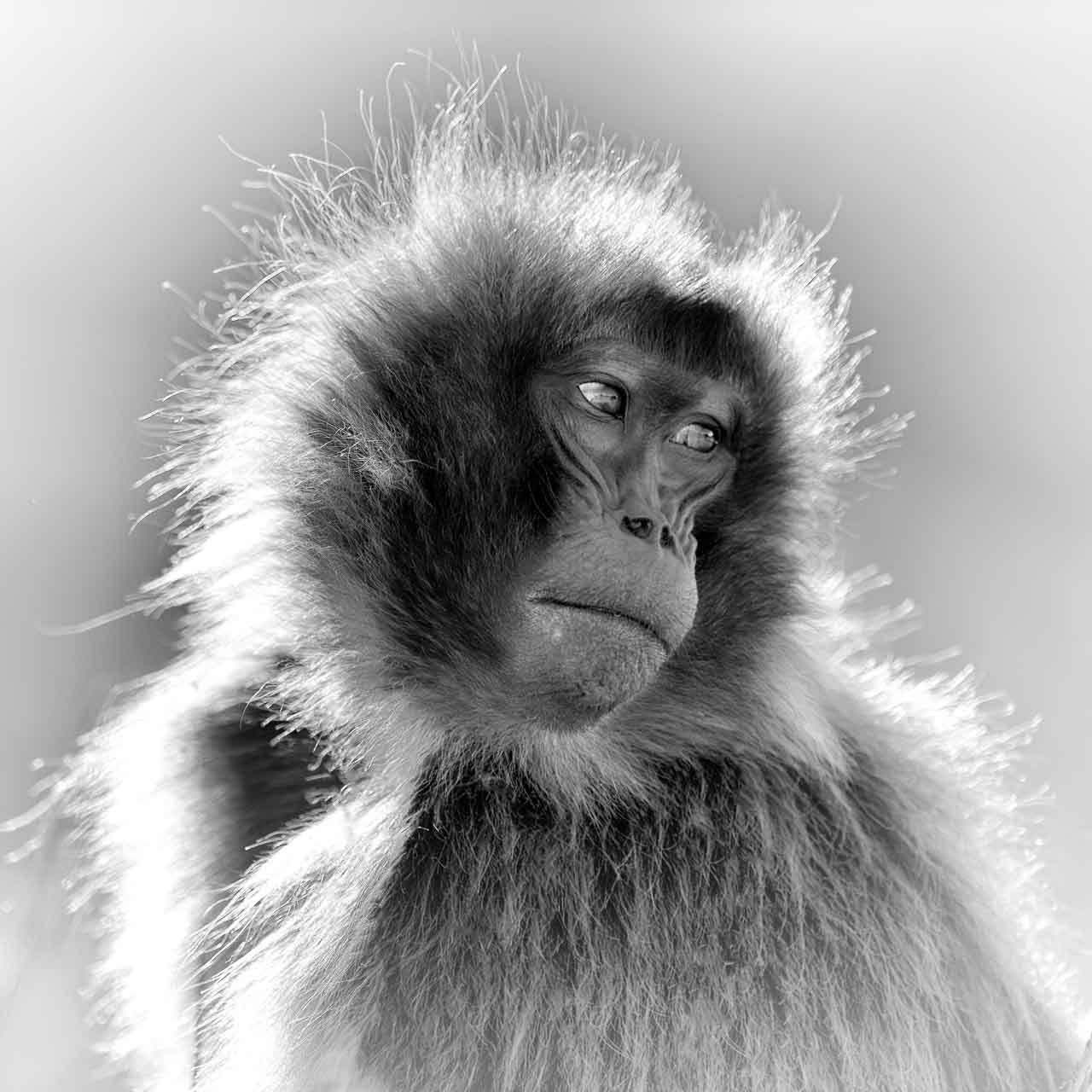
This photograph of a female gelada in Ethiopia is an example of photographic writing. It is part of the collection "Portraits of Geladas".

Table of Contents

  • Writing in Photography Happens in Five Steps
  • A Short Story on the Role of Books
  • The Definition of Writing
  • Why Few Photographs Are Interesting

Writing in Photography Happens in Five Steps

My method for developing photographic writing for the creation of interesting images is divided into five distinct parts:

  • To write well photographically, a photographer must already know what one is talking about.
  • When you want to write with photos, you have a desire to share messages or emotions that you have perceived or encountered. In short, you need experience in order to accomplish such a feat.
  • Knowing different ways in which to express oneself through photos is an asset. It is a toolbox of talents.
  • Understanding the writing and being able to express oneself uniquely is not enough to construct interesting photos. This explains the necessity of language.
  • Finally, the last step is the finalization of photos for a given project.

The first four steps revolve around the photographer. Photographs exist only in a digital form which only he can view and evaluate.

The fifth step concerns the viewers. From the moment of printing for exhibition, the photographs exist physically. It is from this stage that dialogue between the author-photographer and the viewer begins to transpire.

This is the method I use for my photo projects. Detailing each part would be much too long as part of a blog. During the photo workshops that I organize, I can afford to detail the different points and adapt to each photographer’s personality.

Why and How: Judging a Photograph.

A Short Story on the Role of Books

I have been out of society for a few weeks to finalize several contracts. I left my adopted home in Texas for three months. This trip will be long so that I might immerse myself in my own secret universe to arouse the energy necessary to achieve contracts of fine quality.

I am an avid reader. I enjoy writing, as well as reading from authors who know how to entice me to travel far from everyday worries. Since I travel more than six months in a year, my tablet with its subscription to digital libraries has become a source of escape over time. But even these interesting digital books do not give me the pleasure of touching and turning pages. This applies to my own photographs as well. They only exist when I feel the print in my hands. Before this final stage, they are only images—not photographs.

The place where I live when I come to France is a family location. One of the rooms houses my office. A huge library stands proudly along one of the walls, containing nearly all the memories of my departure for a new life in the United States. The shelves bend under the weight of the thousands of books I had read before I left France. These printed books are full of the pleasant times, when I escaped by greedily turning pages of books written by Marcel Pagnol, Jean D'Ormesson, Isaac Asimov, and the countless others whose accomplishments laid the foundation to what I have become.

This morning, I wanted to experience the special smell of paper. I wanted to go through the words printed with black ink. The choice is difficult. My fingers run along the shelves in search of a novel. I do not want to read poetry or essays. I want a novel that will make me escape into dreams of travel.

Suddenly, Terre des hommes written by Antoine de Saint-Exupéry emerges. It is obvious which choice I should make. I sit in one of the chairs in the office. With time, the pages have yellowed. How long will they last? They resemble my memories, slowly disappearing little by little until they will one day be forgotten.

"The earth teaches us more about us than all books." I remember. This first sentence of the novel was a trigger of my passion for nature. It remains obvious to me, even today. Even if I had forgotten it textually, the general idea continues to guide my steps and my passions in every passing day. Gently fingering the pages, I plunge into the story. I remember avidly reading this book in 1989, when I was leaving university with my engineering degree in my pocket. This book was special to me then. I liked its style. I memorized the first sentence. However, the content seemed distant from my reality. Today, with a little experience and a vast perspective on life and humanity, I can finally measure the scope of words written by Antoine de Saint-Exupéry.

Maybe it's the same for photography? With experience, I realized that it takes time. One must actually live life so that he can succeed in creating interesting photographs.

I have finally come to understand that photography is an art that must be used with caution, especially since it is a major art through which I can express myself. I hope that one day I will find a way to do so entirely with photography. Currently, I manage to express a certain emotion or state of the soul, although it occurs sporadically. I really hope that a constant level of perfection is attained one day before my last breath. Patience can be so difficult.

The question that plagues me every day is how some writers and creators quickly found their style and a way of expressing what was laying on their heart. To me, this task is insurmountable. It's not for lack of trying and working in each direction. The further I go, the more endless this search appears to be.

The Definition of Writing

Writing is defined by a system of graphic signs used to record an oral message so that it can be stored and / or transmitted.

Nevertheless, it is also a way of expressing one's thoughts through writings, sounds, and images.

If these two definitions of writing are taken in the first degree, it is possible to say that photography is a form of writing just like poetry or prose. In another article of the blog, I showed that photography is a form of expression.

I must never lose sight of the fact that writing is simply the definition of a sequence of symbols signifying concreteness. Writing alone is not enough to convey messages or express emotions. A language is necessary to organize the writing and accurately express the author.

Landscape Photography: a Real Form of Art.

Why Few Photographs Are Interesting

In this case, why are so few interesting photographs produced every day in the world? I have two possible answers to this question.

The first answer is that most photographers only reproduce what others have captured. Asking no questions, they do not wonder why a photograph was created or what else was taking place in the scene. Holding a camera is an important act that few photographers understand. When you take a camera into your own hands, you are using a tool that will allow a person to express one or more emotions that convey a message.

Cameras, whether they are real cameras or embedded in a mobile phone, have become everyday objects. Most people use them as if they were using a kitchen utensil. The manufacturers’ smooth design and clever marketing cause most photographers to forget what it is they are actually doing when shooting a scene.

Today, cameras are used to make selfies, or to testify whether we were present on the scene of a given event, or to show that we have the means to vacation where others may not. What an emptiness! This intellectual vacuum perpetually annoys me.

Most photographers forget that what they have in their hands is an extraordinary tool for sharing emotions, conveying messages, and revealing a vision to the world.

Be humble, patient, constant, persevering, and persistent because the road to excellence is long.
Why and How Mastering the Semiology in Photography

A nature scene can be photographed in a multitude of ways. The change in composition, framing, or point of view generates hundreds of possibilities. The photographer must be vigilant because time is often another factor when dealing with variations of natural light.

A good knowledge of the semiology of photography can help the artist to quickly create "the right photograph" without hesitation.

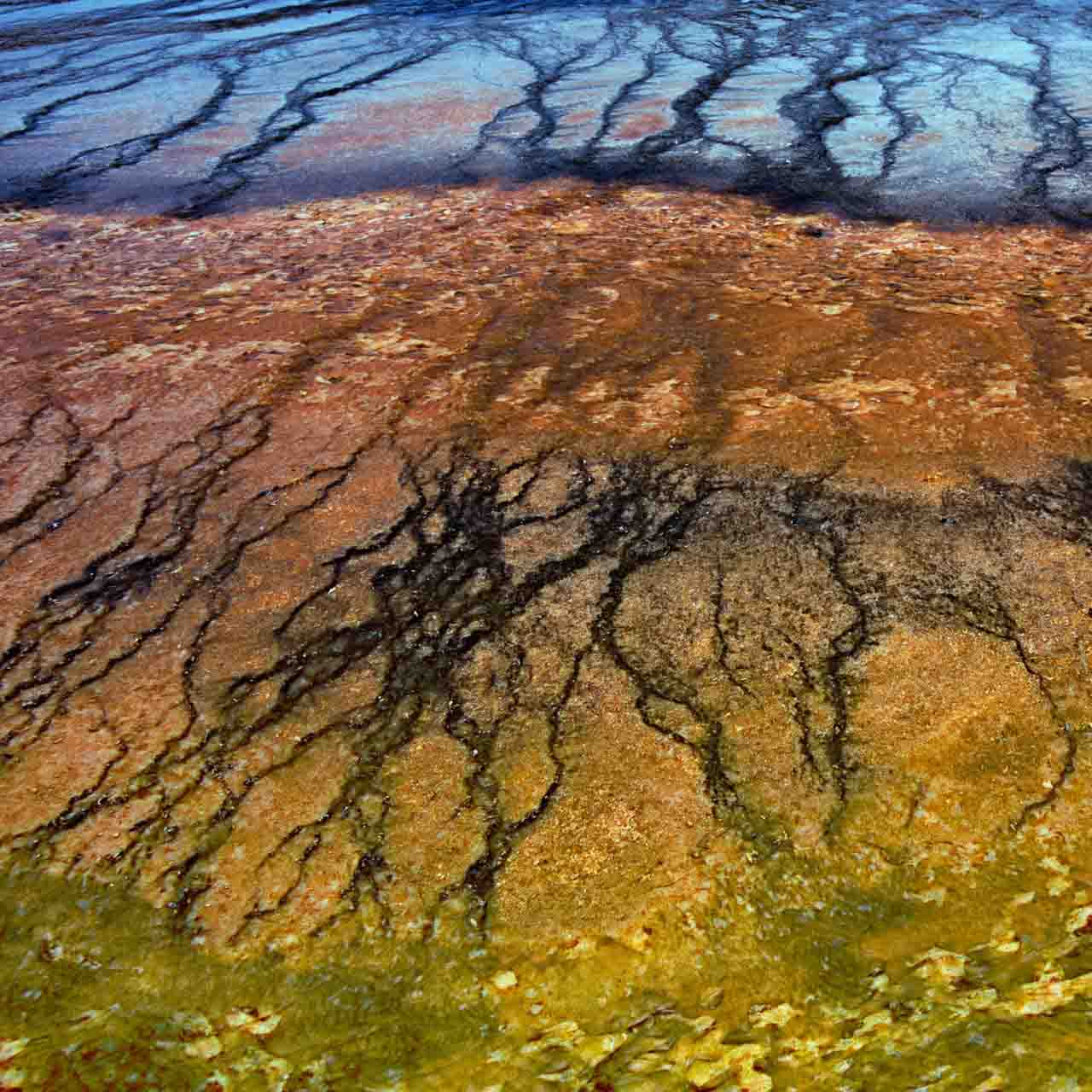
This photograph of the fine art collection 'The paths of the spirit' was the subject of a precise analysis before the shooting.

Table of Contents

  • Definition and Purpose of the Semiology of Photography
  • On the Field
  • We Photograph What We See
  • Making Informed Choices
  • We Can Not Please Everyone
  • Providing a Photograph with Purpose
  • A Photographic Analysis Checklist
  • Finally

Definition and Purpose of the Semiology of Photography

The semiology of photography pertains to the study of the analysis of signs and visual messages. Simply speaking, the development of semiotic qualities allows a photographer to verify the true direction of his photographic approach.

The goal of photographic semiology is to understand how a photographer can create a photograph with an analysis of his artistic and technical choices.

On the Field

On the field, a shot can be constructed from a creative perspective based on my experience, but that's not enough to create interesting photographs. I think that it is always necessary to possess a strong analytical mind for analyzing a scene to understand what I want to highlight.

For me, photography consists of freezing a fragment of space in a moment of time.

Photographing a scene involves a fleeting moment that lasts from a few thousandths of a second to a few seconds. When a beginner practices photography, this time can seem very short. At first, he will have the impression that he has enough time to repeat shots to achieve the best one. However, experience has taught me that this time of shooting, even if it seems short, is indeed very long because the variations of light provoke irremediable changes.

To be convinced it is enough, one must conduct a very easy test. Choose a scene of nature and set your camera to the time lapse function. Take 100 pictures. Then view these snapshots on a computer by scrolling through them quickly. You will notice that all the photos are different. Small variations can cause essential upheavals in the photographic reading. This test is very revealing when shooting at dawn or dusk.

Understanding photographic techniques, yourself, others, the environment, and the light, are some of the key points to consider when creating interesting photos.

Regularly performing photographic analysis, whether for a photographer’s own images, or for the images of another, allows him or her to develop reflexes for capturing the right moment.

We Photograph What We See

Today, in our society where images and communication are crucial, we are invaded by pictures that tout advertising products. Many viewers have become accustomed to hovering over such images. They are no longer interested in the way an image is constructed or in the profound message it conveys. These viewers are only interested in the product that is highlighted.

Most photographers are interested in the form rather than content depth. They do not develop analytical methods to understand photos, instead, they become mere consumers of products.

When these viewers, who are numerous in our society, utilize a camera, they involve the same reflexes. They shoot a photograph that reflects what they have seen. They do not worry about the framing or the composition. They especially do not care about the message. For them, just displaying something is enough to give a sense of depth to a photograph. This mentality is a monumental mistake. These individuals do not realize that photography is a true means of expression that deserves my full consideration.

I meet more and more photographers who have this simplistic attitude. For me, it is a true heresy against the art of photography. This kind of attitude pains us greatly. It is already so difficult to create an interesting photograph, and when someone casts the fruits of a photographer’s labor aside, it is an injustice against the artist.

Making Informed Choices

I am used to saying that to look at a nature photograph is to ask many questions. It appeals to my imagination. Of course, it is not necessary to overlengthen the interrogation. Whether you are creating a photograph or viewing one, you must appreciate the moment of privileged pleasure, especially if the image is artistic. I even believe that it is important to analyze what it is that makes us value the photograph, and why I want to immortalize a nature scene.

To analyze is to understand the purpose for making choices. It enables me to interpret my internal motivations. It is a testimony to other people as well as me. To analyze a situation according to precise criteria of judgment is to rise above the mass of passive spectators who only digest content made by others.

Making informed choices when viewing or creating a photograph is to assume a higher status of being. You have chosen to contemplate life, a more fruitful choice than that of suffering aimlessly in your field without a creative purpose.

These personal choices have consequences on my personal perceptions. Some photos will please a certain audience while others may disapprove.

We Can Not Please Everyone

Since I have chosen the career of artistic photographers of nature, I have understood one essential thing. I cannot please everyone. I have aficionados and critics. Nevertheless, I each respect each other, even if I appreciate my supporters more.

I have developed a loyal clientele of collectors who follow me with great pleasure and joy. I meet some people regularly because time causes contacts to become family. I do not neglect those who are skeptical, though, as it is important to listen to negative remarks and criticisms. However, I rarely consider those words accompanied with disrespect. Made in distasteful and rude arguments, such words have no value to me. In strong contrast, negative reviews that construct and encourage growth are greatly appreciated, as they allow me to question myself and explore new creative ways. This is how I can refine signs and visual messages.

I remember that the most important of these followers is my clientele of collectors. Together, I experience a developmental phase where they are the ones who reinforce and refine my creativity and confidence.

For me, artistic photography involves the spark of establishing long-lasting relationships between the photographer's perception and the viewer's interpretation.

Trying to please everyone means making permanent compromises. It also requires the artist to float on the surface of the artistic field. This does not respect the photographer’s inner talent when delivering messages that only he can replicate. Each artist has his or her own voice in the creative field that is entirely unique and priceless.

Trying to please everyone is the best way to fail in creating interesting photographs.

The regular practice of semiology helps an artist to improve a personal judgment on a photographic approach. Progressing in the construction of interesting photos does not require a large quantity of positive comments from others. I must personally develop an analysis grid that will provide substantial and unique purpose to my own photos.

Providing a Photograph with Purpose

A photographer who wants to create interesting photographs must make informed choices and understands that he has a small audience.

To establish communication and transmit messages with this audience, the photographer must emphasize the following elements in his photographic creations:

  • Linguistic signs. This is called photographic vocabulary, and its symbolism varies according to culture. I can already see that the public critics diminish with the enactment of such signs. It is the interaction of these various signs that give meaning to a photograph. When a viewer analyzes a photo, it will make sense to him and others who can interpret such signs.
  • Iconic objects. These are the visible elements of a photograph: trees, animals, mountains, fish, wrecks ... Each type of nature photo has its own iconic objects.

A Photographic Analysis Checklist

When I analyze a photograph before and after a shot, I always ask myself these questions.

  • What are the photographic elements that I select in my photograph? This is the technical approach.
  • What are the reasons that lead me to create this photograph? This is the artistic approach.
  • How will I transmit my message through the photograph? This is the photographic language.
  • What is the message I am going to convey to the viewer? This is the subjective background of photography. This is the interpretation I make photos of nature.

I always use this photographic analysis checklist for my artistic photographs. It is a simple and very effective method. The difficulty is to remember the entire photographic language. This is a complex area that is difficult to grasp.

But the advantage of this grid of analysis is that it works in my areas of partiality whether for landscape, animal, or underwater photography.

A photographer must learn how to make his own photographic checklist just as he learns a vocabulary to use for the construction of sentences.

Finally

The semiology of photography is essential to understand and to master interesting photos. By taking the time to analyze images, a photographer develops abilities for capture a scene adeptly. He can easily provide purpose to his shots.

Before creating a nature photograph, a photographer must always ask himself what is motivating the act of creation. Moreover, he must ask himself what tools and what elements he will implement. He must learn to develop and enrich his photographic vocabulary.

Be humble, patient, constant, persevering, and persistent because the road to excellence is long.

  1. Why and How Photographing Death Valley in Black and White
  2. Why the Camera is Secondary When Creating an Artistic Photograph
  3. You Must Be Able to Accept Criticism for Creating Photos
  4. Personal Qualities You Should have For Creating Photos

Page 85 of 201

  • 80
  • 81
  • 82
  • 83
  • 84
  • 85
  • 86
  • 87
  • 88
  • 89
  1. You are here:  
  2. Home
  3. Blog Photographic Approach

Share on Social Media

Post
Share
Share
E-mail
WhatsApp
Text

Join Me on Social Networks

Join Me on Facebook  Join Me on Instagram  Join Me on LinkedIn

Claim your free guide to make your photo impactful and meaningful

Claim Your Free Guide '50 Pages of Tips to Give Impact and Meaning to Your Photos'.

1 + 5 =

Click Here To Discover All My Chronicles About the Photographic Approach.

Treat Yourself to a Fine Art Print That Matches your Personality

Example of a vacation home interior with a black and white fine photo art displayed on the wall.

Fine Art Print Collections in Black and White

Fine Art Print Collections in Black and White Black and white photography is a suitable technique for many nature scenes. It requires a particular frame of mind. A black and white photograph should be prepared and planned from the framing to the…
11998
Fine Art Print Collections in Black and White
An abstract art photo displayed in a contemporary living room decor.

Fine Art Print Collections in Color

Collections of Fine Art Prints in Color Color photographs allow digressions and take the audience to the message by secondary ways. The world around us, especially nature, is colorful. A color image can show the way our surroundings really are. Of course, it…
10446
Fine Art Print Collections in Color
Example of a home interior with fine art prints in my style back to black displayed on the wall. These photos are a part of my collection 'Wild beauties of Kenya'.

Fine Art Print Collections in Back to Black

Fine Art Print Collections in Back to Black I want to share my fine art prints of nature in a personal style that I call "back to black." "Back to Black" was developed to embody a sharp and clean style for artistic photos that can be hung in your living room,…
9984
Fine Art Print Collections in Back to Black
A waiting room with a photo in the style Fusion displayed on the wall. Grey Heron in Fusion.

Fine Art Print Collections with the Fusion Style

Fine Art Print Collections with the Fusion Style I would like to share a very creative and modern photography style to represent Nature in a very different way. I call it "Fusion." I created the style to offer dynamic photos, allowing you to start a good day…
7915
Fine Art Print Collections with the Fusion Style
A living room with a photo in the style 'Impression' exposed on the wall. Rising sun in impression

Fine Art Print Collections with the ‘Impression’ Style

Fine Art Print Collections with the ‘Impression’ Style The objective of this photographic style is to create the ephemeral blurs. That's why I named it 'Impression.' Photography, as an art form, is a powerful means of expressing reality from different…
5830
Fine Art Print Collections with the ‘Impression’ Style
Fine art prints from the style back to black displayed on a wall. Amar Guillen, photographer artist

New Collections of Fine Art Prints Dedicated to the Wonders of Nature

New and Updated Fine Art Print Collections Dedicated to the Wonders of Nature Fine art prints from the style back to black displayed on a wall.
11449
New Collections of Fine Art Prints Dedicated to the Wonders of Nature

Themes of the Blog Articles

Landscape of Arches National Park in Utah in black and white.

Blog Articles Dedicated to Artist Statement

Blog Articles Dedicated to Artist Statement
Dunes of death Valley in Black and White

Blog Articles Dedicated to Black and White Photography

Blog Articles Dedicated to Black and White Photography
Abstract photo or trees reflection on water

Blog Articles Dedicated to Photographic Mindset

Blog Articles Dedicated to Photographic Mindset
Abstract photo of ridles on water

Blog Articles Dedicated to Artistic Photography

Blog Articles Dedicated to Artistic Photography
Abstract photo of Yellowstone

Blog Articles Dedicated to Photographic Language

Blog Articles Dedicated to Photographic Language
Pronghorn in Yellowstone

Blog Articles Dedicated to Wildlife Photography

Blog Articles Dedicated to Wildlife Photography
Landscape of Bryce Canyon

Blog Articles Dedicated to Photographing United States

Blog Articles Dedicated to Photographing United States
Underwater waves in the Red Sea

Blog Articles Dedicated to Photographic Techniques

Blog Articles Dedicated to Photographic Techniques
Tree of Black Canyon in Black and White

Blog Articles Dedicated to Landscape Photography

Blog Articles Dedicated to Landscape Photography
Manta Ray in Maldives in Black and White

Blog Articles Dedicated to Underwater Photography

Blog Articles Dedicated to Underwater Photography
Red Deer stag during the rut of the deer

Blog Articles Dedicated to Photographic Judgement

Blog Articles Dedicated to Photographic Judgement
Great Crested Greb and his chick

Unclassified Blog Articles

Unclassified Blog Articles


Receive Free Tips On How to Give Impact and Meaning to Your Photos. Subscribe to Receive Regular Articles.

7 + 10 =

Contact Me By Email

9 + 3 =
This site is protected by reCAPTCHA and the Google Privacy Policy and Terms of Service apply.

About Amar Guillen, Creator of Fine Art Prints of Nature
As a photographer capturing the artistic essence for several decades, I have mastered the art of crafting an authentic experience for art enthusiasts and collectors of visual art.
When I observe my surroundings, be it friends, family, relationships, or professional contacts, I see souls in perpetual motion. Every moment of their existence is engulfed by daily hassles, work concerns, social media, online or televised information streams, and videos on the web.
Every minute, they strive to accomplish something, fearing losing ground and feeling marginalized in this frenzied society. Imprisoned by an oppressive schedule, the essential eludes them, drowned in the tumult of daily life. Is it really crucial to watch yet another cat video on the internet? Is it necessary to post twenty daily messages on social media?
Despite this, they remain constantly stressed and anxious about the challenges of the world, without being able to influence these monumental problems. It is at this moment that my artistic nature photographs come into play. Those who have had the privilege of hanging one of my works in their personal or professional space have expressed a radical transformation in their lives.
Every day, contemplating these works of art immerses them in tranquility, inner peace, and rediscovered serenity. They then understand that nature has the power to unravel tensions, to encourage reflection on the essential. Artistic photographs thus become open windows to the wonders of nature.
I have chosen to share the best of myself by helping others discover their identity, personality, style, all while reconnecting with nature. Take the time to explore my artistic photographs if you wish to reveal your true essence. Once hung in your space, your view of the world will be transformed.
Amar Guillen is a creator of fine art prints of nature.
I am Amar Guillen, creator of nature art photographs. I have a deep conviction that contemplating nature has the power to transform human beings. If everyone learned to know, respect, and preserve nature, our world would be transformed into a haven of peace where everyone would find their place.
Copyright © 2003 - 2026 Guillen Photo LLC - All rights reserved. Amar Guillen, professional photographer since 2003.
  • Blog
  • Calibration
  • Legal Information
  • Sitemap
  • Accessibility
  • Contact Me
  • Updates of the Website
I Want to Help You to Create Interesting Photos

How Can I Help You To Create More Interesting Photos?

Ask Me a Technical Question.
Subscribe to my Newsletter. The Inspiration Behind Guillen Photo.

Select your language

  • English (United Kingdom)
  • Français (France)
Claim your free guide to make your photo impactful and meaningful

Claim Your Free Guide '50 Pages of Tips to Give Impact and Meaning to Your Photos'.

4 + 7 =

Contact Me By Email

10 + 8 =

Office Address:
3512 Robin Road
Plano Texas 75075
USA

Office phone: (+1)214-769-6825