• The Art of ChoosingHome page
  • Fine Art Prints3 Editions
  • CollectionsAll Collections
  • AboutAmar Guillen
  • Customer Space & Contact
  • Select your language

    • English (United Kingdom)
    • Français (France)
  • All You Need to Select Your Fine Art Print
    • How to Choose a Fine Art Print - Q&A - FAQ
    • New Creations
    • Explore Some Interiors
    • Fine Art Print Blog
  • Browse by Edition
    • All Fine Art Prints
    • Unique Edition
    • Limited Edition
    • Open Edition
  • Browse by Style
    • Black and White
    • Color
    • Fusion
    • Impression
    • Back to Black
    • Landscapes in Black and White
    • Landscapes in Color
    • Animals in Black and White
    • Animals in Color
  • Browse by Theme
    • Landscape
    • Wildlife
    • Underwater
    • Abstract
    • Symbolic
    • Landscapes of the United States
    • Landscapes of France
    • Landscapes of Scotland
    • Seascapes
    • Relaxing
    • Energizing
    • Playful
  • Browse by Format
    • Rectangular
    • Square
    • Panoramic
  • Contact Me
    • Contact Me by Email or Phone
  • Collections
    • New Collections
    • All Collections
  • Browse by Theme
    • Landscapes
    • Wildlife
    • Underwater
    • Abstract
    • Symbolic
    • Landscapes of France
    • Landscapes of the United States
  • Browse by Style
    • Black and White
    • Color
    • Impression
    • Back to Black
    • Fusion
  • Contact Me
    • Contact Me by Email or Phone
  • Discover More About Me
    • Discover Who is Amar Guillen
    • Artistic and Photographic Statement
  • Galleries
    • Photo Galleries
    • Abstract Portfolio in Color
    • Black and White Landscape Photography Portfolio
    • Color Landscape Photography Portfolio
    • Black and White Wildlife Photography Portfolio
    • Color Wildlife Photography Portfolio
    • Underwater Photography Portfolio
  • Contact Me
    • Contact Me by Email or Phone
  • Your Customer Space
    • Create or Manage your Account
    • Your Download Space
    • Your Orders
  • Contact Me
    • Contact Me by Email or Phone

You are in that section: Home > Blog > Blog of the Photographic Creation Approach

How Creating and Succeeding Fine Art Photos with Snow
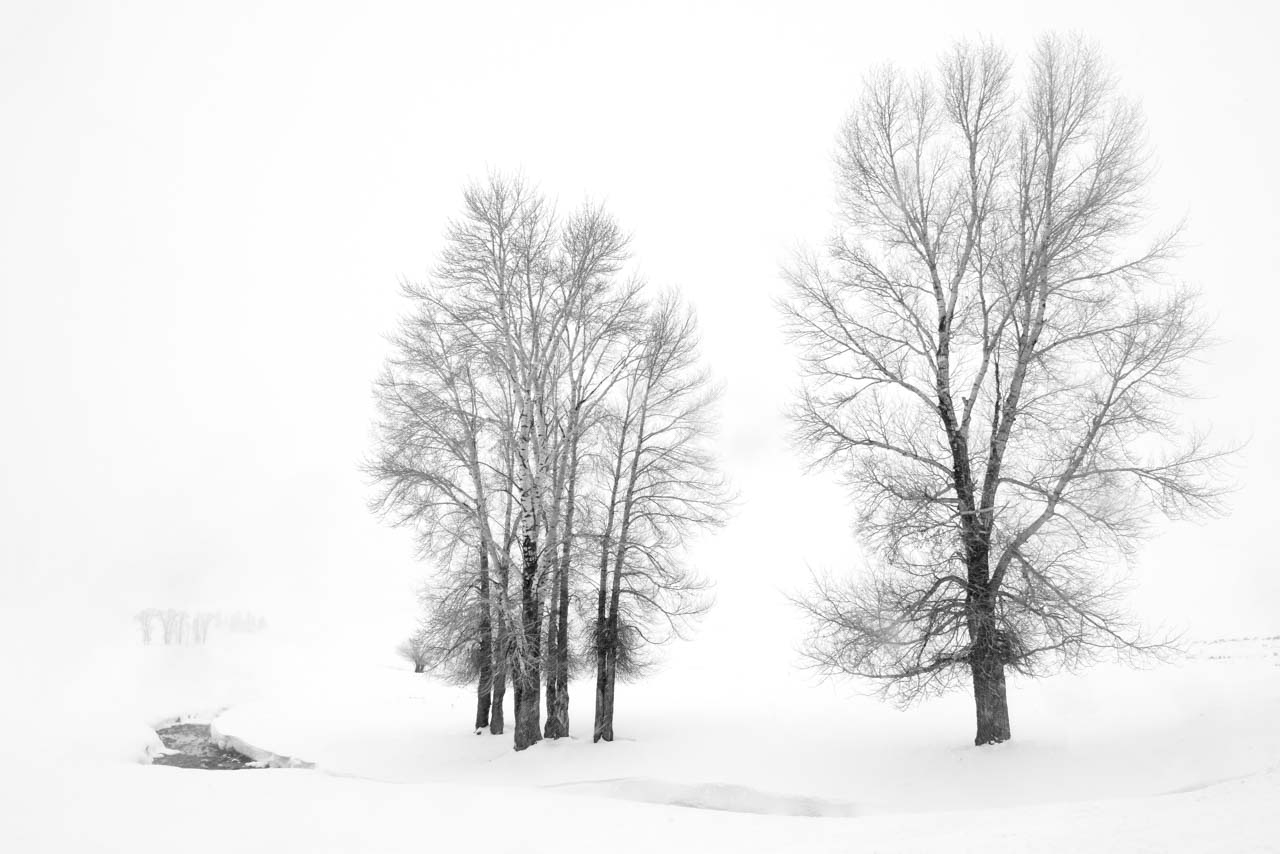
Photograph of trees surrounded by snow. The white color enhances the dreamlike aspect of the scene.

Why: Photographing Scenes with Snow

The technique for photographing snowy scenes is an important point to master. But the essential point is to ask yourself why you should use this natural element in your photographs.

Snow makes it possible to add a very dreamlike dimension to your photographic compositions.

Few people in the world have ever seen snow. You must remember that it is a privilege. By creating photographs with snowy scenes, you will be able to think of all those individuals who have not experienced such beauty.

The snow is the element par excellence to create clean and minimalist scenes.


Snow as an Artistic Element

For us, snow is an extraordinary element to include when composing artistic photographs. It allows us to evoke a multitude of emotions and sensations that are difficult to translate in scenes without snow.

First of all, snow evokes dreams of vast expanses, silence, solitude, and emptiness.

It also evokes purity because of its bright whiteness.

But it can also mean death and suffering, because when it snows, it can be extremely cold.

Everything depends on your state of mind in the moment.

For example, snow is synonymous with our childhood in a small village in northern France. We built snowmen with our friends as children. There was laughter, shouts of joy during snowball battles, and carelessness.

The light, graceful snow evokes tranquility, serenity, and time that freezes. Its whiteness blankets the beautiful and the unsightly, creating a landscape where only the essential structures are visible.

The snow is also the sound of footsteps in an absolute calm. Nothing can disturb us. The body is soothed despite the surrounding cold.

But I also like to consider the snow as a natural rebirth, because it shrouds nature during winter, and reveals it in the spring. New life will be reborn. It's very symbolic but that's how I conceive snowy landscapes.


The Symbolism of the Snow

Invariably, snow is associated with winter. It evokes muffled and padded sounds when steps fall upon its icy crystals.

The snow evokes the color white, as landscapes and vast expanses are blanketed in its whiteness. With snow, everything has disappeared: trees, plants, stones, and earth. It is as if a crazy painter washed everything in a pristine white to better revive nature after an expiatory period.

The snow also brings suffering for those who have no roof to shelter under from the cold. It numbs both the body and the soul.

When the snow falls, everything is silent. This is quite different from rainfall, which can be very noisy. Regardless of their number, the flakes dance to the earth in silence. They elegantly wrap all the shapes of nature, erasing any horrors of the world. It can sublimate a landscape by covering it with a heavy white coat.

The snow evokes silence, calmness, loneliness, renewal, mystery, beauty, purity, and serenity. It also reminds some people of bitterness, hardship, and pain.

But there is a term that I love above all when I think of snow, which is virginity. When I look at snowy landscapes, I feel that everything is pristine without noise, odors, unnecessary cacophony. It seems possible to begin again with a fresh start.

I like the feeling of timelessness and calm, although these emotions are temporary when temperatures increase. The snow does not change the amount of time, but simply seems to suspend it. This is a period of introspection, allowing us to contemplate the directions to take in life.

Snow is a natural element which makes it possible to create scenes of dreamlike nature that enable us to escape into another world.
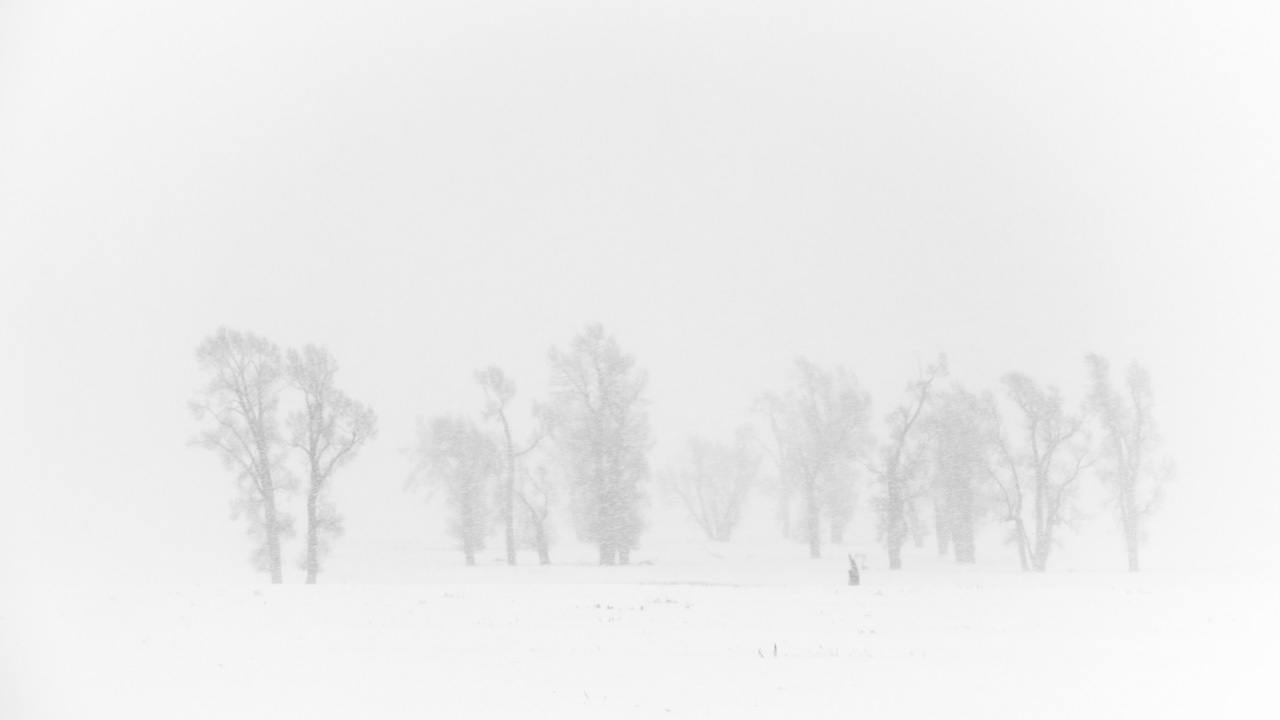
The snowstorm reinforces the mysterious side of this photograph.
 

Snow is Only the Negative Space of a Nature Photo

What is paradoxical with the snow is that you may have the impression with my explanations that the snow itself is the main subject of your photographs. However, this is not the case. As I had mentioned in this article, it is only the negative space of a photo’s compositions.

In a landscape of snowy nature, you capture trees, vegetation, a lake, mountains, etc.

In an animal photograph you portray a mammal, a bird, or any other living being.

The animals are the center of interest. The snow is only present to support them in standing out from the background. The animals constitute the essential part of your photographs, and the photographer must use the snow to highlight them.

You have to find the right balance and the right placement in your compositions even if they are minimalist photos.

I advise you not to forget the animals when you compose a photo with snow.


Black and White or Color

The big question you will inevitably ask yourself is whether you will develop your photographs in color or in black and white. There is no automatic answer.

This decision depends on your photographic identity as I described in this article, and it depends on what you want to convey to viewers.

If you want to create an illustrative photograph for your friends, a magazine, or a tourist brochure, I recommend color. You must stay in the purely descriptive register and display the landscapes or the animals as they exist naturally. You must be as faithful as possible to reality. In color development, it is important to remain neutral, by not accentuating whiteness or details too much.

If you want to create an artistic photographic because you wish to express emotions as I had described in this article, I suggest color or black and white. In this case, you can emphasize whiteness, shadows, or details. Both modes are perfect for artistic expression.


The Best Time of the Day

If you choose color, the ideal time to photograph is early in the morning or at the end of the day. If you are lucky, the sun will be visible, and it will allow you to capture color shades that are not present later in the day when the sun is at the highest point.

The contrast of scenes at the beginning or end of the day is much better for color photographs. When the scenes are strongly contrasted, the details are more easily apparent in the textures of flowers, leaves, fur, feathers, etc.

Photos taken in the middle of the day are more suited to black and white developments.

Photographing early in the morning or late in the afternoon is a very important benefit. Indeed, the temperatures are colder. The air seems more clean and clear. During these moments, it is easier to photograph snow crystals that shine because of the skimming sun.

Personally, I prefer the black and white that corresponds more to my state of mind and my way of transmitting emotions. However, this is a personal choice. You must define your own style and venture as far as possible in your approach.

The choice of the time of day to make photographs depends on what you want to show and which emotions you wish to transmit. Personally, I spend all day on the field. With my snowshoes, I can walk miles in search of an animal or a particular scene. As the days are generally quite short in winter, the time spent on the field does not exceed a few hours.


Step Out of Your Comfort Zone

I recommend you shoot snowy scenes only if you are comfortable with the cold. Photographing in the cold requires appropriate clothing and special gloves to access the different controls on the camera. Leaving equipment in these conditions for several hours can be dangerous.

Do not try to venture in the snow without taking many precautions. The trip should be experienced, and you must have a more specific purpose than just wanting to create different pictures.

You must prepare as best as you can. From experience, I can tell you that even with preparations, you will encounter an unfortunate event.

As I said in this article, it is important that you step out of your comfort zone to create different and interesting photographs. Your state of mind is essential. You should never risk your physical safety. Creating a photograph, as extraordinary as it is, is not worth putting your life on the line.


Finally

I think that snow is a major asset to creating cozy, dreamlike, and timeless atmospheres. Snow erases all impurities and creates mysteries in the photographed scenes. However, be careful. The experience can be dangerous if you are not well prepared.

I recommend you prepare for your photographic sessions in the snow in two ways. You must first check your equipment and practice techniques. You must then practice identifying your artistic perspective. It is imperative that you understand why you are tempted by the snow and how you truly want to utilize it.
How Photographing and Succeeding Your Photo with Snow

Do you enjoy photographing landscapes or animals during the winter?

Your photographs evoke silence and emptiness. The snow’s immaculate whiteness also evokes purity.

However, snow can also evoke suffering and death due to its extreme cold and frost.

Snow is an extraordinary photographic element of suggestion and interpretation. It is a source of inexhaustible creativity.

Technically speaking, it may not always be good to photograph snowy scenes. In the same way, framing and compositions can be more complicated than at first sight.

I will share with you how I approach this natural element in nature photography both technically and artistically.

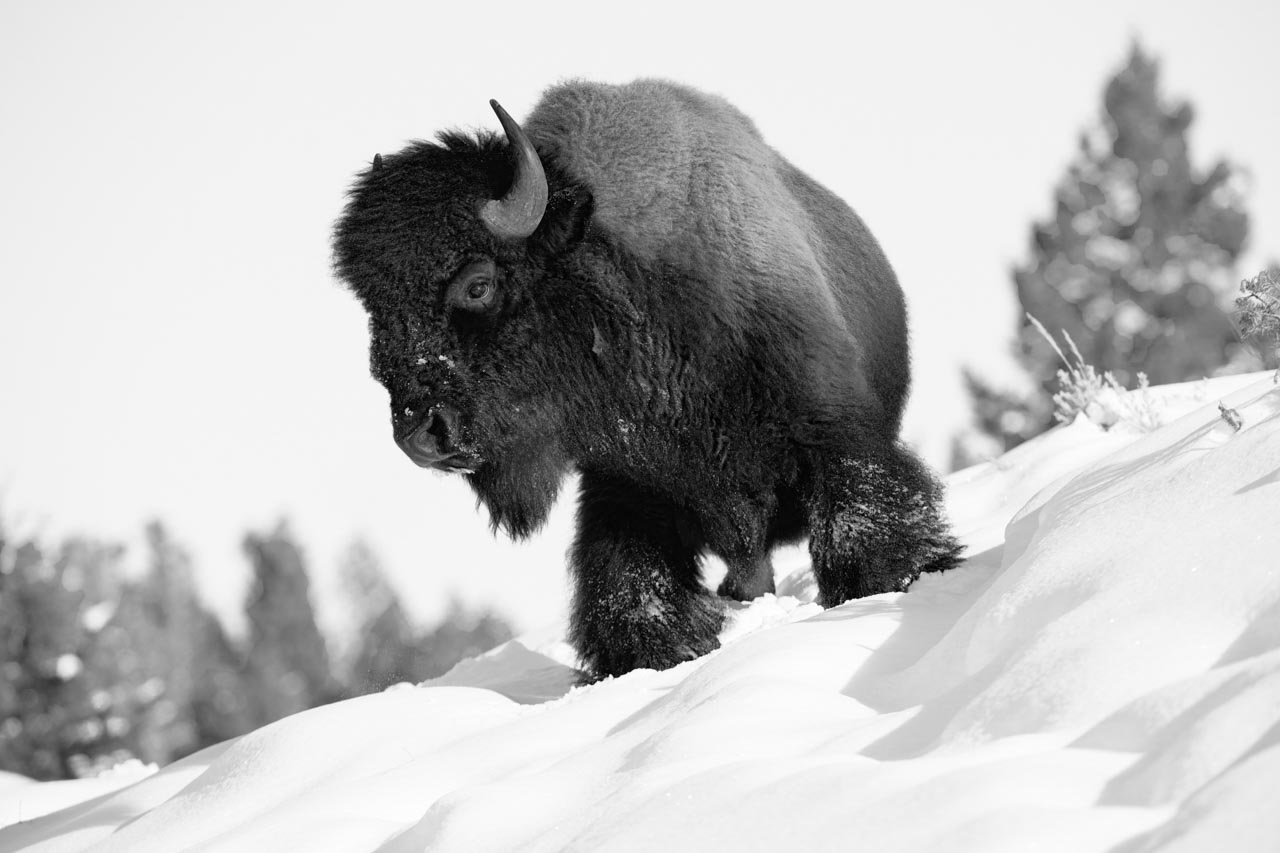
Photograph of a bison in the snow in North of United States.

Table of Contents

    Page 1

  • Managing Exposure
  • Bien gérer la balance des blancs
  • Adjust a Shutter Speed to the Needs of the Scene
  • Managing Your Equipment on the Field
  • Page 2

  • Why: Photographing Scenes with Snow
  • Snow as an Artistic Element
  • The Symbolism of the Snow
  • Snow is Only the Negative Space of a Nature Photo
  • Black and White or Color
  • The Best Time of the Day
  • Step Out of Your Comfort Zone
  • Finally
 

Managing Exposure

The first technical problem in photographing snowy scenes is the adjustment of the exposure.

The camera tends to under-expose the exposure of a scene when there is snow.

The first adjustment to make on your case is the exposure mode.

In general, matrix mode (or evaluative mode at Canon) gives good results. The camera calculates the exposure across the stage.

If you are photographing a tree or an animal with a dark tone in a snowy scene, you certainly want to keep details in the structures of the coat or the plumage. In this case, I advise you to work in spot mode. You measure the light on the animal or plant. You memorize it and take the picture. The snow will appear very white and certainly overexposed, but the important thing is to preserve the details of the main focus present in the scene.

If you are shooting in automatic mode (program mode) or semi-automatic mode (shutter priority or aperture priority), your camera will perform an exposure calculation by averaging the entire scene. The snow will appear gray in these situations.

Indeed, since the snow is very bright, the camera will want to underexpose the photograph to reduce the exposure to a neutral value. The photographer performs calculations on a mean gray value of 18%. It is for this reason that the snow will appear gray and not white as in reality. My advice is to offset the exposure in a positive way. You can start with +2/3, increment or down one or + 1.3 +1.7 2 or EV.

This acronym EV means exposure value.

EV is the unit of measurement the amount of light received by a sensor.

By positively composing your exposure, the snow will appear white. It's up to you to perform some tests and check the result on the screen and with the histogram to determine the correct value.

If you are shooting in manual mode without using Auto ISO mode, I recommend overexposing the exposure with the previous method by increasing the sensitivity for a given aperture and speed.

If you are shooting in manual mode using Auto ISO mode, you only need to compensate your exposure positively for the scene. This is the equivalent of the semi-automatic mode.

I recommend that you check the histogram of your photos in the control panel. If your histogram is pasted on the right side, then your photo is overexposed. Some of the pixels in the photo are too exposed. Your histogram should not be glued to the left or stuck to the right. With photos of snow, it will certainly be located to the right of the midpoint. This is perfectly normal.

My advice is that when shooting, the snow is neither too gray nor too white. It is at the moment of development with the computer that you will set the tones you want.

To properly expose a snowy scene, simply overexpose the photo with positive compensation and control the histogram to ensure that it is to the right of the midpoint.

I advise you to shoot in RAW mode because you can easily adjust the exposure during development. You can increase or decrease it a little. If you're shooting in JPEG, you can change the brightness of the photograph at the time of development, but this is not equal to exposure. Thus, the results of shooting in JPEG will be worse.


Managing White Balance

The second technical problem in photographing snowy scenes is that of the white balance setting.

Large, snow-covered expanses tend to absorb the color of ambient light. If the sky of your scene is very cloudy, the snow will appear with a bluish tint.

You have two choices. You can set the white balance to cloud mode, or you can manually set the white balance using a special card. This second choice is the method I use.

To calibrate my white balance, I use the ColorChecker system from Rite. It is a very practical system that comes in the form of a small slate that folds. There is a multitude of colored squares and a white slate. For all my landscape photos, I use this system not only to manage my colors but also to fix my white balance.

Sometimes in my photographs with the snow, I do not try to completely neutralize the bluish tint. After all, blue is a cold color. As part of the creation of an artistic photo, this reinforcement can be beneficial.

However, if you shoot in RAW mode, you can always adjust the white balance of your photos at the time of development. I remind you that a photo in RAW does not have a color space. It is at the moment of development that this is fixed. If you are shooting in JPEG, you will not be able to change the white balance at the time of development because the color space is fixed by the camera at the time of shooting, which can be either sRGB or RGB.

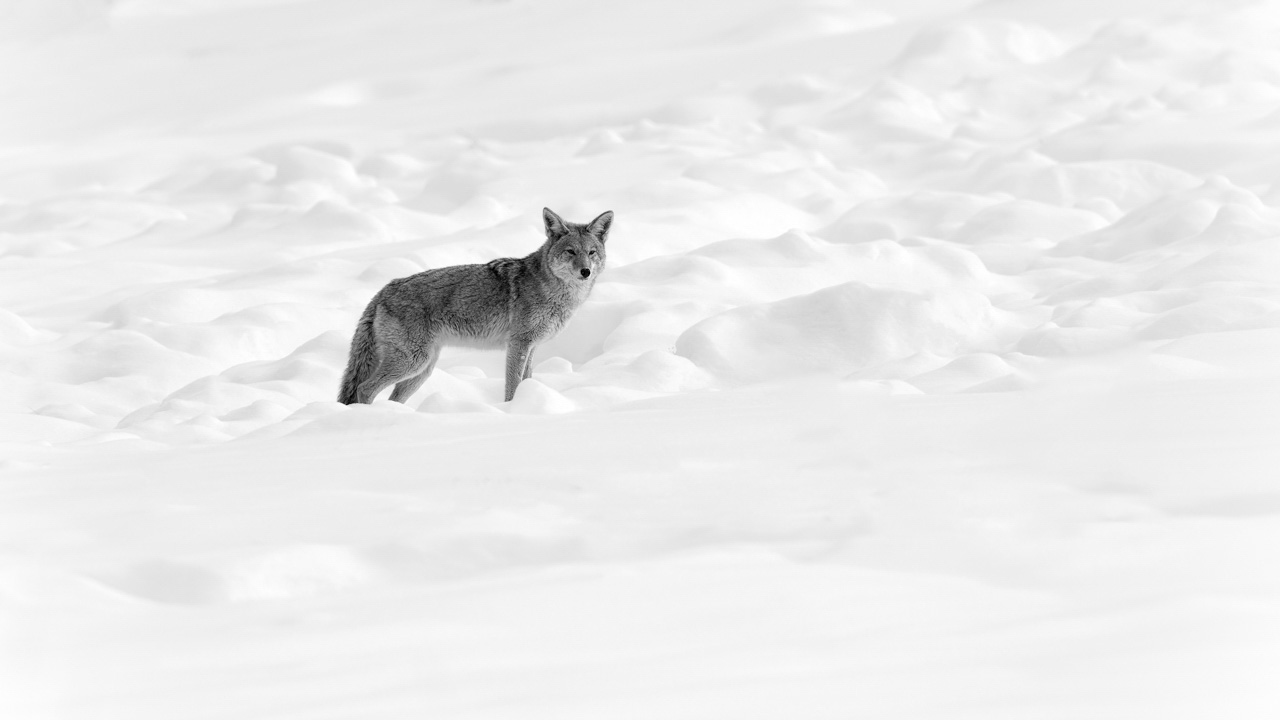
Photograph of a coyote in the snow in North of United States.
Photograph of a coyote in the snow in North of United States..
 

Adjust a Shutter Speed to the Needs of the Scene

The third and last technical problem that can occur when shooting snowy scenes is the shutter speed during a snowfall.

To freeze falling snowflakes I recommend a speed at the moment 1/400 of a second. If they fall sharply, you can increase the speed to freeze them.

If you want to create an artistic photograph by creating a yarn for flakes, I recommend a low speed.

There are no fixed values for speed. It all depends on the effect you are looking for. I advise you to bracket your compositions and your effects at the time of shooting.

You will choose at the moment of the selection on the computer, the photos which suit you.

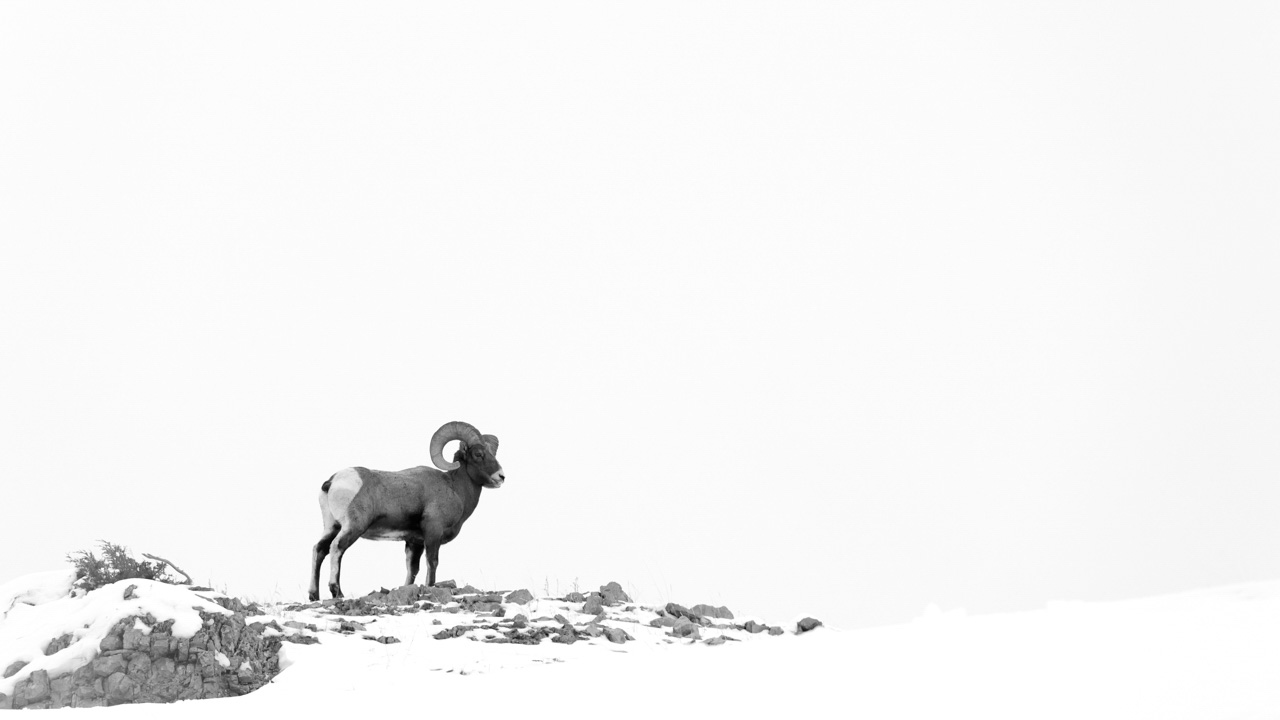
Photograph of a bighorn sheep in the snow in North of United States.
 

Managing Your Equipment on the Field

When anyone thinks of snow, they immediately remember its coldness. For photographers, this coldness creates problems with the cameras, the batteries, and the objectives.

Several problems appear if you want to shoot while it is very cold. This winter, we went to create photos for a collection in northern United States. Everyday temperatures were around -30 degrees Celsius.

With a camera that stays outside for two hours, the batteries wear out very quickly. With one battery, we usually create about 400 photos with our 45-megapixel sensor. In these difficult conditions, we arrived on average at 150 photos. When it is very cold, the batteries discharge very quickly.

At each trip, I had 2 batteries in reserve that I put in a pocket with small heating bags.

The second problem that we often encounter is that the lenses’ engines get stuck. The auto focus does not work anymore. Our only solution is to disengage in manual focus mode and focus with the ring available on the lens.

If it snows, I advise you to utilize the hood of your lens. Not only does it enhance the contrasts of your photos, but it also protects the lens from falling snowflakes.

Finally, if you photograph nature scenes for several hours and decide to come back to a warm place such as your car, I advise you to put your camera in a waterproof plastic bag to avoid condensation. Leave the camera inside for several minutes before returning to the field.

If you let the condensation settle on your camera body or your lens, you will have tiny droplets of water that will form. This will increase the risk of damaging your electronic equipment. High-end cameras are tropicalized, but entry-level ones are not. The different prices of equipment do not change our opinion. We never take chances with damaging property. When I enter a heated cabin, I place my camera in waterproof bags for 40 to 60 minutes.

Why Photograph Scenes with Snow

  1. Your Photographic Style Is a Part of your Photographic Identity
  2. Why You Should Define Your Photographic Identity
  3. Creating a Fine Art Photo Is Not About Showing What You See
  4. One of the Goals of your Fine Art Photos Is to Translate your Emotions

Page 79 of 201

  • 74
  • 75
  • 76
  • 77
  • 78
  • 79
  • 80
  • 81
  • 82
  • 83
  1. You are here:  
  2. Home
  3. Blog Photographic Approach

Share on Social Media

Post
Share
Share
E-mail
WhatsApp
Text

Join Me on Social Networks

Join Me on Facebook  Join Me on Instagram  Join Me on LinkedIn

Claim your free guide to make your photo impactful and meaningful

Claim Your Free Guide '50 Pages of Tips to Give Impact and Meaning to Your Photos'.

6 + 2 =

Click Here To Discover All My Chronicles About the Photographic Approach.

Treat Yourself to a Fine Art Print That Matches your Personality

Example of a vacation home interior with a black and white fine photo art displayed on the wall.

Fine Art Print Collections in Black and White

Fine Art Print Collections in Black and White Black and white photography is a suitable technique for many nature scenes. It requires a particular frame of mind. A black and white photograph should be prepared and planned from the framing to the…
11998
Fine Art Print Collections in Black and White
An abstract art photo displayed in a contemporary living room decor.

Fine Art Print Collections in Color

Collections of Fine Art Prints in Color Color photographs allow digressions and take the audience to the message by secondary ways. The world around us, especially nature, is colorful. A color image can show the way our surroundings really are. Of course, it…
10446
Fine Art Print Collections in Color
Example of a home interior with fine art prints in my style back to black displayed on the wall. These photos are a part of my collection 'Wild beauties of Kenya'.

Fine Art Print Collections in Back to Black

Fine Art Print Collections in Back to Black I want to share my fine art prints of nature in a personal style that I call "back to black." "Back to Black" was developed to embody a sharp and clean style for artistic photos that can be hung in your living room,…
9984
Fine Art Print Collections in Back to Black
A waiting room with a photo in the style Fusion displayed on the wall. Grey Heron in Fusion.

Fine Art Print Collections with the Fusion Style

Fine Art Print Collections with the Fusion Style I would like to share a very creative and modern photography style to represent Nature in a very different way. I call it "Fusion." I created the style to offer dynamic photos, allowing you to start a good day…
7915
Fine Art Print Collections with the Fusion Style
A living room with a photo in the style 'Impression' exposed on the wall. Rising sun in impression

Fine Art Print Collections with the ‘Impression’ Style

Fine Art Print Collections with the ‘Impression’ Style The objective of this photographic style is to create the ephemeral blurs. That's why I named it 'Impression.' Photography, as an art form, is a powerful means of expressing reality from different…
5830
Fine Art Print Collections with the ‘Impression’ Style
Fine art prints from the style back to black displayed on a wall. Amar Guillen, photographer artist

New Collections of Fine Art Prints Dedicated to the Wonders of Nature

New and Updated Fine Art Print Collections Dedicated to the Wonders of Nature Fine art prints from the style back to black displayed on a wall.
11449
New Collections of Fine Art Prints Dedicated to the Wonders of Nature

Themes of the Blog Articles

Landscape of Arches National Park in Utah in black and white.

Blog Articles Dedicated to Artist Statement

Blog Articles Dedicated to Artist Statement
Dunes of death Valley in Black and White

Blog Articles Dedicated to Black and White Photography

Blog Articles Dedicated to Black and White Photography
Abstract photo or trees reflection on water

Blog Articles Dedicated to Photographic Mindset

Blog Articles Dedicated to Photographic Mindset
Abstract photo of ridles on water

Blog Articles Dedicated to Artistic Photography

Blog Articles Dedicated to Artistic Photography
Abstract photo of Yellowstone

Blog Articles Dedicated to Photographic Language

Blog Articles Dedicated to Photographic Language
Pronghorn in Yellowstone

Blog Articles Dedicated to Wildlife Photography

Blog Articles Dedicated to Wildlife Photography
Landscape of Bryce Canyon

Blog Articles Dedicated to Photographing United States

Blog Articles Dedicated to Photographing United States
Underwater waves in the Red Sea

Blog Articles Dedicated to Photographic Techniques

Blog Articles Dedicated to Photographic Techniques
Tree of Black Canyon in Black and White

Blog Articles Dedicated to Landscape Photography

Blog Articles Dedicated to Landscape Photography
Manta Ray in Maldives in Black and White

Blog Articles Dedicated to Underwater Photography

Blog Articles Dedicated to Underwater Photography
Red Deer stag during the rut of the deer

Blog Articles Dedicated to Photographic Judgement

Blog Articles Dedicated to Photographic Judgement
Great Crested Greb and his chick

Unclassified Blog Articles

Unclassified Blog Articles


Receive Free Tips On How to Give Impact and Meaning to Your Photos. Subscribe to Receive Regular Articles.

2 + 9 =

Contact Me By Email

1 + 5 =
This site is protected by reCAPTCHA and the Google Privacy Policy and Terms of Service apply.

About Amar Guillen, Creator of Fine Art Prints of Nature
As a photographer capturing the artistic essence for several decades, I have mastered the art of crafting an authentic experience for art enthusiasts and collectors of visual art.
When I observe my surroundings, be it friends, family, relationships, or professional contacts, I see souls in perpetual motion. Every moment of their existence is engulfed by daily hassles, work concerns, social media, online or televised information streams, and videos on the web.
Every minute, they strive to accomplish something, fearing losing ground and feeling marginalized in this frenzied society. Imprisoned by an oppressive schedule, the essential eludes them, drowned in the tumult of daily life. Is it really crucial to watch yet another cat video on the internet? Is it necessary to post twenty daily messages on social media?
Despite this, they remain constantly stressed and anxious about the challenges of the world, without being able to influence these monumental problems. It is at this moment that my artistic nature photographs come into play. Those who have had the privilege of hanging one of my works in their personal or professional space have expressed a radical transformation in their lives.
Every day, contemplating these works of art immerses them in tranquility, inner peace, and rediscovered serenity. They then understand that nature has the power to unravel tensions, to encourage reflection on the essential. Artistic photographs thus become open windows to the wonders of nature.
I have chosen to share the best of myself by helping others discover their identity, personality, style, all while reconnecting with nature. Take the time to explore my artistic photographs if you wish to reveal your true essence. Once hung in your space, your view of the world will be transformed.
Amar Guillen is a creator of fine art prints of nature.
I am Amar Guillen, creator of nature art photographs. I have a deep conviction that contemplating nature has the power to transform human beings. If everyone learned to know, respect, and preserve nature, our world would be transformed into a haven of peace where everyone would find their place.
Copyright © 2003 - 2026 Guillen Photo LLC - All rights reserved. Amar Guillen, professional photographer since 2003.
  • Blog
  • Calibration
  • Legal Information
  • Sitemap
  • Accessibility
  • Contact Me
  • Updates of the Website
I Want to Help You to Create Interesting Photos

How Can I Help You To Create More Interesting Photos?

Ask Me a Technical Question.
Subscribe to my Newsletter. The Inspiration Behind Guillen Photo.

Select your language

  • English (United Kingdom)
  • Français (France)
Claim your free guide to make your photo impactful and meaningful

Claim Your Free Guide '50 Pages of Tips to Give Impact and Meaning to Your Photos'.

1 + 3 =

Contact Me By Email

2 + 7 =

Office Address:
3512 Robin Road
Plano Texas 75075
USA

Office phone: (+1)214-769-6825